If you train at home, a mirror for exercise is about the closest thing you'll get to a coach watching every rep. You can see your knees drifting in on a squat or your back starting to round on a deadlift, and fix it right then instead of finding out later.
That said, the research on mirrors is a little more interesting than "mirrors are good." They really do help with form. But for some people, especially beginners, staring at yourself the whole workout can make it feel worse. Below, we'll walk through what the studies found, where a mirror actually helps, and how to set one up so it works for you.
Short answer: Yes, a mirror helps most people train better, mainly because it lets you check your form as you go. Use it for quick glances at key positions, not as something to stare at for the whole session.
What Researchers Have Found
It really does help with form
This has been tested. In one study of female runners with knee pain, 10 runners trained in front of a full-length mirror for 8 sessions while getting simple verbal cues. Their hip mechanics got better, and the change showed up in single-leg squats and step-downs they never practiced. Even 1 and 3 months later, after the mirror was gone, most of it had stuck.
That's the real value of a mirror. You see the problem the moment it happens, and after enough reps, the better pattern starts to feel normal.
Staring at yourself can backfire
There's a flip side. In a 2003 study published in Health Psychology, 58 women who rarely exercised rode a stationary bike for 20 minutes twice: once facing a mirror and once with it covered. After the mirror ride, they felt less energized and less relaxed, even the women who felt good about their bodies. The researchers also pointed out that people who already work out regularly might not react the same way.
So the answer isn't to ditch the mirror. It's to use it for checking how you move, not for judging how you look.
Dancers use it as a tool, not a crutch
Dance teachers have wrestled with this for years. A 2024 study of ballet dancers points out that studio mirrors let dancers correct their own position and alignment, but earlier research found that leaning on them too much may slow down how fast dancers pick up new skills. That's why some teachers limit mirror time instead of taking the mirrors down.

What a Mirror for Exercise Actually Does for You
1. You Can Fix Your Form Mid-Set

You can see your squat depth, where your knees are going, your bar path, and your back angle while you're moving. So you fix it on the next rep, not after the set's over. We go deeper on this in our post on how gym mirrors improve weightlifting form.
2. You Learn What Good Form Feels Like
Proprioception is just your body's sense of where it is when you're not looking. A mirror helps you connect what a position feels like with what it looks like. A good habit: once a rep looks right, do a couple without looking so you lock in the feel.
3. You Get a Second Set of Eyes at Home
When you train alone, nobody's there to tell you your back is rounding on that last deadlift. A mirror won't replace a coach, but it'll catch a lot of form breakdown when you're tired.
4. It Helps With Yoga, Pilates, and Dance

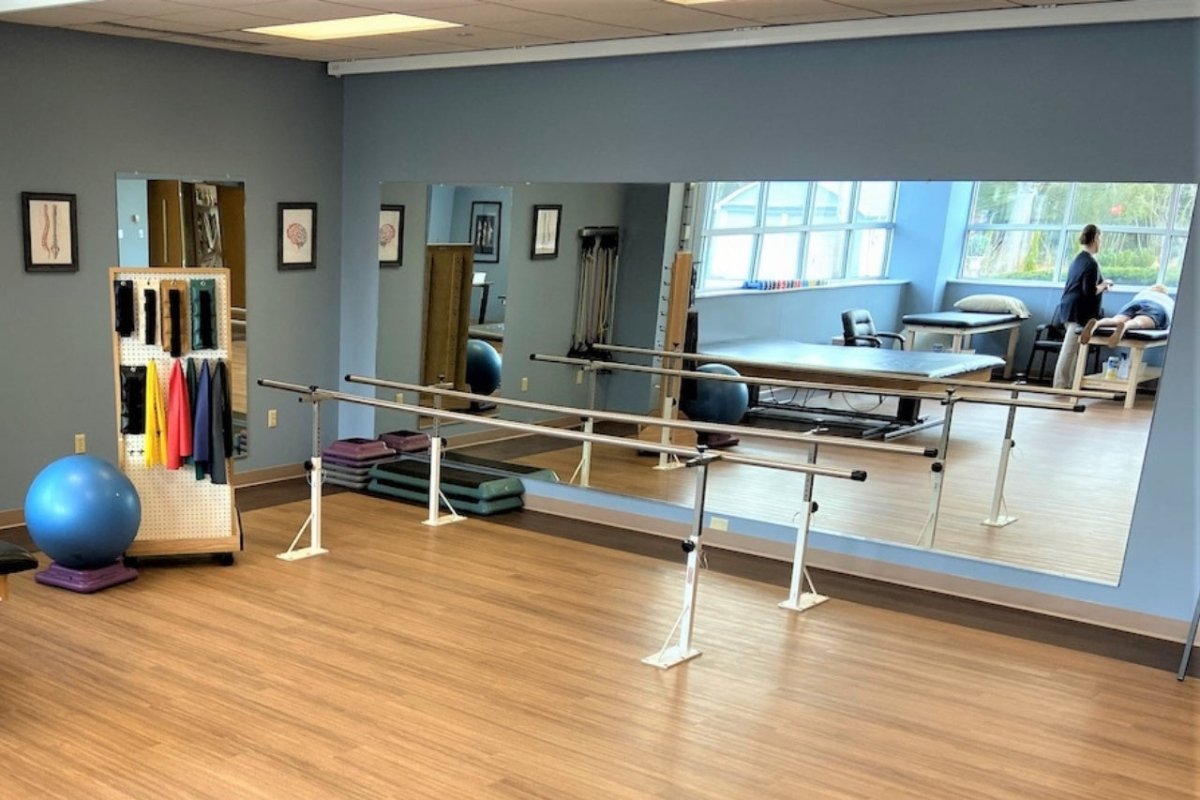
Alignment is everything in these. A mirror lets you check your hips, shoulders, and knees, and it lets an instructor see the whole class at once. If you're outfitting a studio, our tips on choosing yoga studio mirrors are a good place to start.
5. The Room Feels Bigger and Brighter
Mirrors bounce light around, which makes a real difference in basements and spare rooms with small windows. A full mirror wall can make a tight room feel a lot more open.
6. It Feels Like a Real Gym
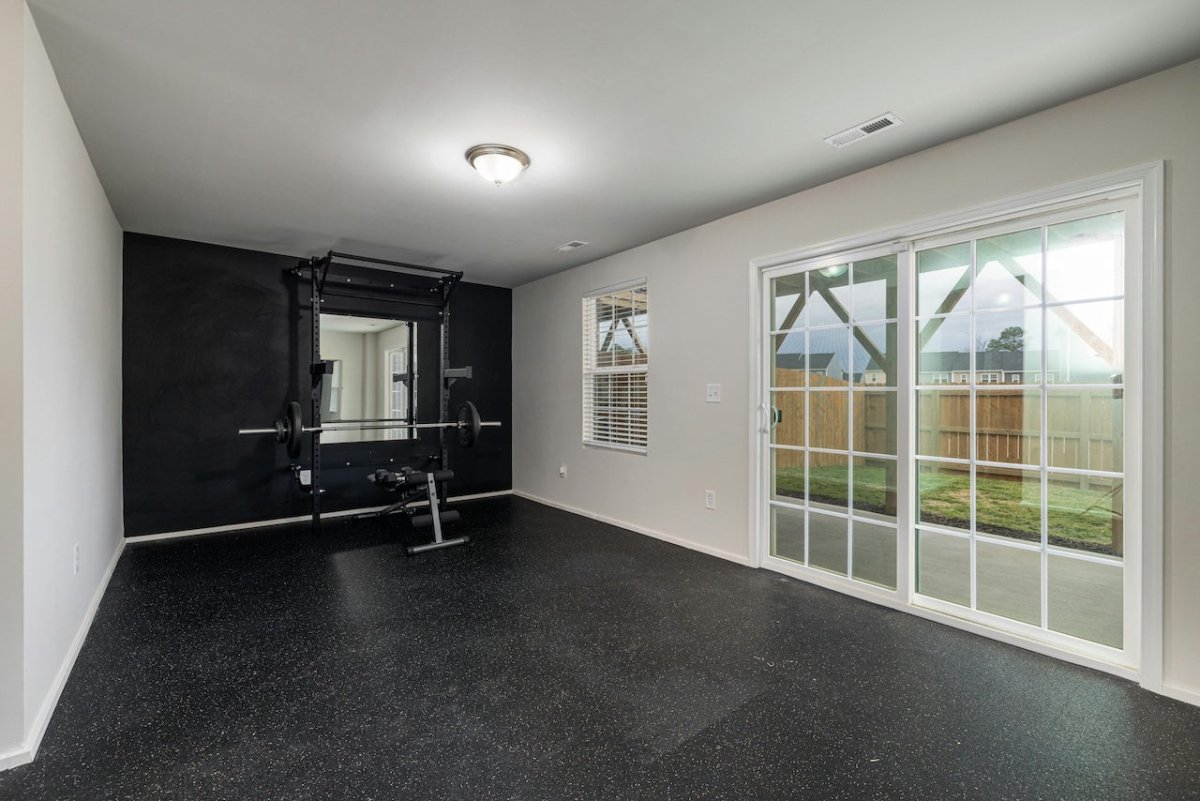
Put a mirror wall in a garage bay or spare bedroom and it stops feeling like a storage room with a treadmill in it. That makes it easier to walk in and actually train.
How to Get the Most Out of Your Mirror
- Glance, then feel. Check the important spots, like the bottom of your squat, then do a few reps without looking.
- Watch the movement, not your looks. Pick one thing to check each set, like whether your knees track over your toes.
- Face away for cardio if you want. You don't need a mirror to ride a bike, and some people just enjoy it more without one.
- Get a side view. A mirror on a second wall, or simply turning sideways, shows your back angle and depth in a way the front view can't.
- Film a set every so often. A mirror shows one angle and flips left and right. Your phone fills in the gaps.
Where to Hang an Exercise Mirror

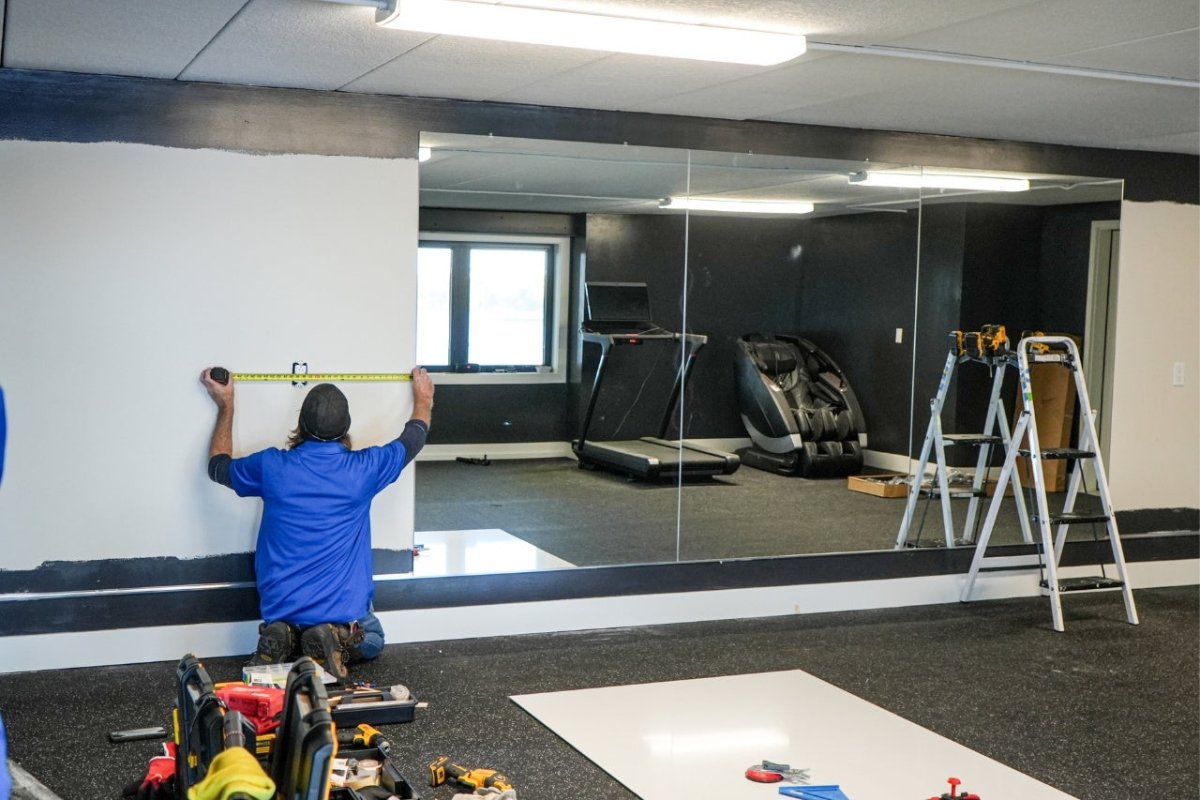
Most people hang a mirror too high. If you want to see your whole body, feet included, start it 0 to 16 inches off the floor, or just above your outlets. That's where we start most of ours.
- Put it where you train. Hang it on the wall you face from your rack, bench, or mat.
- Go tall. A 4' × 6' panel hung vertically shows you head to toe. Here's why a full-length mirror matters in a home gym.
- Go wider if you have room. Panels side by side give you space to move, and one on an adjacent wall gives you a side view.
Not sure whether to go with glass, acrylic, or tiles? Our guide to exercise room mirror types breaks it down.
What a Workout Mirror Costs
A 4' × 6' mirror is $344.99 and a 3' × 5' is $274.99. Professional installation is $75 per mirror, so one 4' × 6' comes to $419.99 installed, and a 12-foot wall of three is $1,259.97. If your wall is concrete, block, or brick, add $50 per mirror.
Every mirror is 1/4-inch (6mm) glass with flat-polished edges and a safety backing film that holds the glass together if it gets hit. We deliver and install within 100 miles of our 8 metro hubs, usually within 3 to 10 days.
Mirror for Exercise FAQs
Does working out in front of a mirror improve your form?
It can. Studies have found that mirror feedback helps people correct things like knees caving in during squats. It works best when you use it for quick checks at key points in a lift.
Should beginners use a mirror?
Yes, for checking form. Some beginners feel self-conscious in front of one, so glance at how you're moving instead of staring at yourself. And if you'd rather not look during cardio, just face the other way.
How high should a workout mirror be?
Start it 0 to 16 inches off the floor, or just above the outlets, so you can see your feet. Eye level is too high for most exercises.
What size mirror do I need for working out?
For most people, a 4' × 6' panel hung vertically shows you head to toe. Put two or three side by side if you want room to move around.
Is a glass workout mirror safe?
Ours have a safety backing film that holds the glass together if it gets hit, so it webs instead of breaking into loose shards. Just make sure it's mounted to the wall, not leaning against it.
Ready for Your Own Mirror Wall?
Build your mirror wall online and pick your install date at checkout. We'll deliver it and hang it, usually within 3 to 10 days. Customers rate us 4.99 out of 5 across 650+ reviews.
Build Your Mirror WallQuestions? Give us a call at (651) 615-4234 or email info@mirrorsdelivered.com, 9:00 AM to 5:00 PM CST.