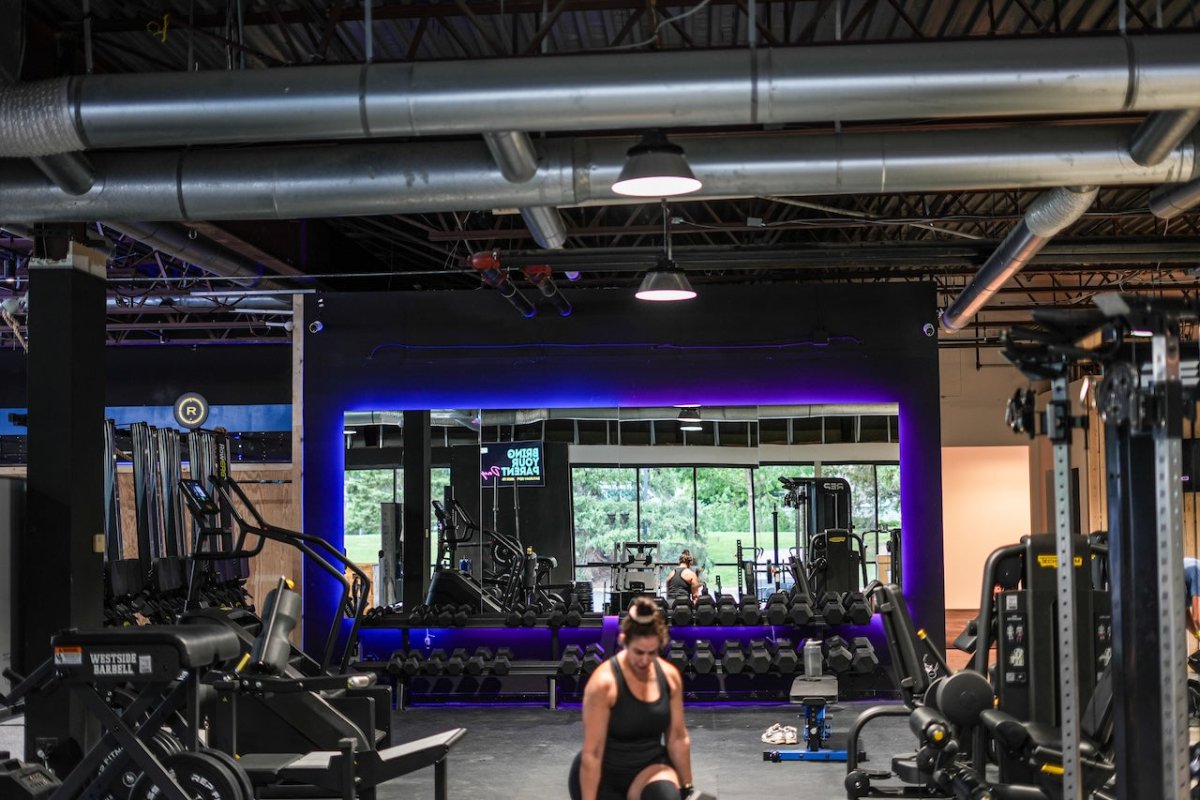
If you run a yoga or Pilates studio in the Des Moines metro, your space probably looks like one of three things: an old brick storefront in the East Village, a lower-level room in an older home or building, or a fresh drywall box in a new Ankeny or Waukee build-out. Each one takes a mirror wall a little differently.
Below, we'll walk through what yoga and Pilates studio mirrors in Des Moines cost once they're installed, how to lay them out for your kind of building, what to look for in the glass itself, and how to keep it looking good through Iowa's sticky summers and dry winters.
The short answer
Panels are $274.99 (3 × 5 ft) and $344.99 (4 × 6 ft), plus $75 per mirror to install. A 13-foot studio wall takes three 4 × 6 ft panels and comes to $1,259.97 installed on drywall. We deliver and install within 100 miles of our Des Moines location, usually within 3 to 10 days.
How a Mirror Wall Helps You Teach
Ask most instructors and they'll tell you the mirror is the closest thing to a second teacher in the room. It shows students what their body is actually doing, not just what it feels like it's doing.
Take a student in Warrior II. They feel solid, but one glance at the mirror shows their front knee drifting in toward the big toe. They fix it on their own, and you never had to stop cueing the rest of the class.
On the reformer, it's usually the pelvis. A clear view of the mirror lets clients check that their hips stay level through footwork without twisting their neck to look.
It works for you, too. With a full mirrored wall, you can face the class and still keep an eye on the back row. Demo a move facing the mirror, and students see your back and your front at the same time.
Then there's the room itself. In a yoga studio, clear, flat glass makes the whole space look bright and finished. Wavy or streaky mirrors do the opposite, and that's not the impression you want when clients are paying for premium classes.
What Yoga and Pilates Studio Mirrors Cost in Des Moines
Most studio walls only need our two stock sizes. You pay per mirror for installation, plus a surcharge if the wall is brick or concrete, which comes up a lot in the metro's older buildings and basements.
| Panel size | Mirror only | Installed on drywall | Installed on brick or concrete |
|---|---|---|---|
| 3 × 5 ft (36 × 60 in) |
$274.99 | $349.99 | $399.99 |
| 4 × 6 ft (48 × 72 in) |
$344.99 | $419.99 | $469.99 |
Before tax. Final pricing is confirmed at checkout.
Example: a new studio in a suburban retail bay
Say you're fitting out a new space in Ankeny or Waukee with a 25-foot front wall and a 13-foot side wall. You'd use six 4 × 6 ft panels across the front and three down the side.
| Line item | Cost |
|---|---|
| Nine 4 × 6 ft mirrors | $3,104.91 |
| Professional installation (9 × $75) | $675.00 |
| Standard finish hardware | Included |
| Total on drywall | $3,779.91 |
Before tax. Each wall leaves about 6 inches at both ends.
A few choices change the total. If you'd like a matching rail along the top instead of clips, the premium finish adds a second J-channel (the rail the glass sits in) for $30 more per mirror. Channels come in satin silver at no charge or matte black for $15 per mirror. If an outlet, switch, or thermostat lands in the middle of the run, a cutout is $150.
You'll find more worked examples in our guide to affordable wall mirrors in Des Moines. And if you'd rather spread out the cost, eligible buyers can split an order under $1,000 into 4 interest-free payments with Shop Pay.
Mirror Layouts for Des Moines Studio Spaces
Brick storefronts in the East Village and Court Avenue
The East Village's older storefronts went up between the 1870s and the 1920s, and they're almost all brick, according to the State Historical Society of Iowa. That brick is a big part of the charm. It also bows and dips after a century or more, so expect the crew to shim the bottom channel to get the run level. Brick walls add $50 per mirror.
These buildings tend to be long and narrow. The class usually faces the short wall, so that's the one to mirror first. If the room runs deep, add a run along one long wall so people in the back can still see themselves.
Mind the front windows as you plan. Glass that faces a big storefront window can send glare straight back into the room late in the day, so a side wall is often the better pick in these buildings.
Landlords of historic buildings usually care about what goes into their walls. Our standard install uses no glue, just a channel along the bottom and clips on top, so when your lease ends, you're left with a few small screw holes to patch.
Lower-level studios and home practice rooms
Basements are the norm around here. In 2024, 62.3% of new single-family homes in the West North Central region, which includes Iowa, were built with a full or partial basement, according to the National Association of Home Builders. That's why a lot of home yoga and Pilates rooms end up downstairs.
Before you order, check two things. The first is the wall. Finished drywall is the base price, while a bare poured-concrete or block foundation wall adds $50 per mirror.
The second is headroom. A 4 × 6 ft panel hung vertically needs about 7 feet of clear wall once you leave a gap at the floor. If a low ceiling, beam, or duct run gets in the way, turn the panels sideways so they're 6 ft wide and 4 ft tall, or switch to 3 × 5 ft panels.
Upstairs in older homes, the walls are a different story. Neighborhoods like Beaverdale, known for its brick houses, and Sherman Hill often have plaster walls instead of drywall. Plaster isn't one of the options on the order form, so send us a photo of the wall before you order. Our guide to home gym mirrors and installation in Des Moines covers home rooms in more detail.
New builds in Ankeny, Waukee, and West Des Moines
Newer commercial space is usually a clean drywall rectangle, which makes it the easiest kind of room to mirror. Give the mirror the full length of the wall your students face.
If you want a second wall, use the one next to it so the two runs form an L. Avoid mirroring walls that face each other. The repeating reflection looks like an endless tunnel and pulls focus during balance work.
Reformer and tower rooms
Towers and Cadillacs block your view of the back of the room, so in an equipment studio the mirror does a lot of the teaching. The main run belongs on the wall the reformers point toward, and it should start low, since clients work near the floor. Add a shorter run on a side wall so someone lying on their back can glance over and check their alignment.
Barre walls
A barre and a mirror want the same wall. You can start the glass just above the barre line, which takes fewer panels but cuts off the view of the legs. For a full-body view, pair a low mirror run with a freestanding or floor-mounted barre. If wall brackets need to go through the mirror run, send the bracket layout with your wall photo before you order so the panels can be planned around it.
What to Look for in Studio Mirror Glass
Your students balance, lunge, and swing props a few feet from this wall, so the glass needs to be built for it. Here's what you get with ours, and why it matters in a studio:
- A true reflection: our panels are 1/4-inch (6 mm) glass. Thinner 1/8-inch mirrors flex on an uneven wall and make the reflection wave, which is distracting in the middle of a pose.
- Clean edges: all four edges are flat-polished, with no rough seams or sharp corners.
- Annealed glass with a safety film: large wall mirrors are annealed rather than tempered, because tempering can add distortion. A vinyl backing film holds the glass together if it's ever hit, so it webs instead of breaking into loose shards. Fitness insurers often ask about it.
- Mechanical mounting: the glass sits in a J-channel with clips on top instead of being glued, so a damaged panel can be swapped out without tearing into the drywall.
If you're weighing a cheaper option, our comparison of hardware store mirrors vs commercial-grade gym mirrors breaks down the differences.
Caring for Studio Mirrors Through Iowa's Seasons
Des Moines weather is hard on a studio in both directions. Summers are humid, winters are cold and dry, and both show up on the glass.
- Hot rooms: if you run heated classes, tell us when you order. Summer humidity on top of a heated room means more condensation, so pick an interior wall where you can and keep air moving between classes.
- Winter static: dry winter air pulls dust onto the glass. Wipe it down with a slightly damp microfiber cloth first, then clean.
- The right cleaner: spray cleaner onto the cloth rather than the glass so it can't drip into the channel, and avoid ammonia, which can damage the silvering along the edges. For the step-by-step, see our guide on how to clean a mirror.
How Ordering and Install Day Work
There's no showroom visit or back-and-forth quote. You order online, pick a date, and the crew handles the rest.
-
1
Measure and photograph the wall
Measure the width and the clear height. As a rule of thumb, three 4 × 6 ft panels fill a 13-foot wall with 6 inches to spare on each side. Upload a photo showing outlets, thermostats, and baseboards at checkout.
-
2
Pick your options and a date
Choose your panels, wall surface, and finish, then pick an install date and time slot. Commercial projects are booked in half-day blocks, so you can schedule around classes.
-
3
We deliver and install
The crew shims the channel level, sets the glass, and cleans up. A single wall up to 16 feet wide usually takes 2 to 3 hours.
We deliver and install within 100 miles of our Des Moines location at 5485 NE 17th St Suite B, Des Moines, IA 50313. That covers the whole metro plus Ames, Newton, Pella, Marshalltown, Fort Dodge, Ottumwa, and Waterloo. Cedar Rapids, Iowa City, and Mason City sit right around the 100-mile line, so check your address before you book.
Yoga and Pilates Studio Mirrors in Des Moines: FAQs
How much does a mirror wall for a yoga or Pilates studio cost in Des Moines?
Each 4 × 6 ft panel is $344.99, plus $75 per mirror to install. A 13-foot wall with three panels comes to $1,259.97 on drywall, and a two-wall L layout with nine panels comes to $3,779.91, before tax. Brick or concrete walls add $50 per mirror.
How high should studio mirrors start?
Start the bottom edge 0 to 16 inches above the floor, or just above the outlets. So much of a yoga or Pilates class happens on the mat that a mirror starting any higher misses most of it.
How far ahead of opening should I order?
Give yourself two to three weeks. Delivery and installation usually happen within 3 to 10 days, and the extra time lets you sort out the wall type, cutouts, and an install date that doesn't collide with the rest of your build-out.
Will the mirrors damage a leased space?
No. The standard install uses a bottom J-channel and top clips with no glue, so removal leaves only small screw holes that patch in minutes.
Can I mirror more than one wall?
Yes. One or two adjacent walls work well in most rooms. Avoid walls that face each other, since the repeating reflection can be disorienting.
Can I install the mirrors myself?
You can, but we don't recommend it. A 4 × 6 ft mirror weighs about 75 pounds and needs two installers with glass suction cups. Professional installation is $75 per mirror, and there's a delivery-only option if you're set on doing it yourself.
Do you do home yoga and Pilates rooms too?
Yes. A spare bedroom or basement room usually takes two panels. Our guide to home gym mirrors in Des Moines covers home layouts.
Price Your Studio Mirror Wall
Order online, or call us to work through the layout and pick an install date around your classes.
(651) 615-4234 | info@mirrorsdelivered.com | 9:00 AM to 5:00 PM CST