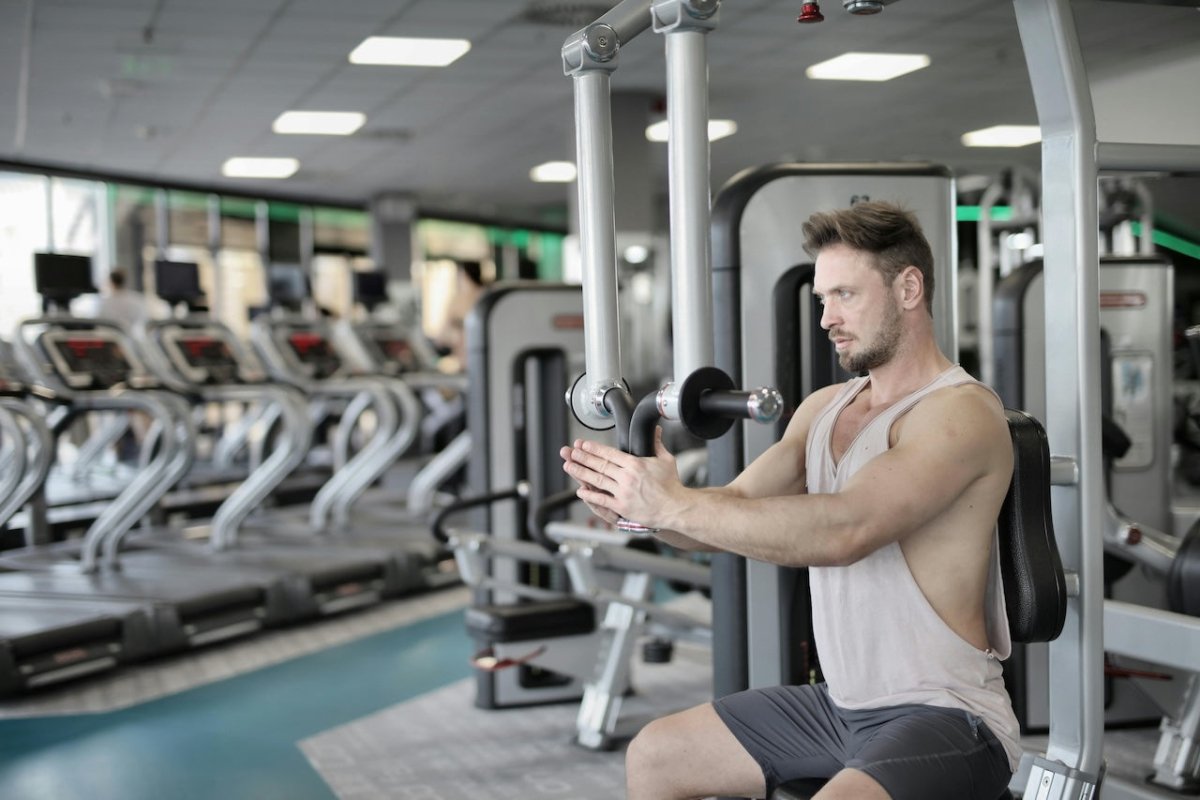
These gym membership statistics come straight from the latest national data, not recycled blog numbers. Membership in the US hit a new record in 2025, people are training differently than they did before the pandemic, and the way they use gyms, studios, and their own homes keeps shifting.
Below you'll find the numbers that matter: how many people belong, who they are, how often they go, what they do once they're inside, and what it all costs. Then we'll break down what these trends mean for gym and studio owners, and for anyone thinking about building a training space at home.
Gym Membership Statistics 2026: Key Takeaways
- Record membership: 81 million Americans belonged to a gym, studio, or fitness facility in 2025, up 5.2% from 2024 and 26.1% of everyone aged six and older.
- Steady growth since the pandemic: membership grew 20% from 2019 to 2024, with the strongest two-year growth streak on record in 2023 and 2024.
- Younger and older members are driving it: Gen Z adults have the highest membership rate at 35.5%, and members 65 and older are the fastest-growing group.
- Studios lead: studios had 23.1 million members in 2024, edging out fitness-only gyms.
- Fewer no-shows, lighter visits: only 4.6% of members never used their membership in 2025, but the average member goes about 1.5 times a week, down from 2.1 in 2019.
- Free weights, yoga, and Pilates are rising: machines and standalone cardio are losing ground to form-focused training.
- What it means for you: strength and mind-body training depend on good form, which is why a full mirror wall is standard in studios and the first upgrade in most home gyms.
Gym Membership Statistics 2026 at a Glance
Most figures below come from the Health & Fitness Association (HFA, formerly IHRSA), which surveys about 18,000 US residents every year. The 2025 figures are from the HFA 2026 consumer report, and the 2024 figures are from HFA's 2025 report and its expanded insights follow-up.
| Statistic | Figure | Year |
|---|---|---|
| US gym, studio, and fitness facility members | 81 million (all-time high) | 2025 |
| Growth from the year before | 5.2% | 2025 |
| Share of Americans aged six and older who are members | 26.1% | 2025 |
| People who used a facility, including day passes and guests | More than 100 million | 2025 |
| Visits to US fitness facilities | Nearly 7 billion | 2025 |
| Members who didn't use their membership at all | 4.6% (record low) | 2025 |
| Age group with the highest membership rate | Gen Z adults 18 to 24, at 35.5% | 2025 |
| Fastest-growing age group | Members 65 and older, up 8.6% | 2025 |
| Members who meet federal aerobic activity guidelines | 49.4%, vs. 24.5% of non-users | 2025 |
| Studio members (largest facility type) | 23.1 million | 2024 |
| Fitness-only gym members | 22.2 million | 2024 |
| Average visits per member | About 1.5 per week, down from 2.1 in 2019 | 2024 |
| Members who used a personal trainer | 22.6% (record high) | 2024 |
| Members who took small-group training | 32.3% (record high) | 2024 |
How Gym Membership Has Grown Since 2019
Gyms took a hard hit in 2020, then came back stronger than before. According to HFA, membership grew 20% between 2019 and 2024, and the industry posted its strongest two-year growth streak on record in 2023 and 2024.
US gym, studio, and fitness facility members
Millions of members. Source: Health & Fitness Association.
+5.8%
+5.6%
+5.2%
The 2019, 2022, and 2023 figures are our own math, worked back from HFA's reported growth rates. The 2024 and 2025 figures are HFA's.
The pandemic dip was steep. In Finder's survey of US adults, total spending on gym memberships fell 76% from 2019 to 2020 as gyms closed or limited capacity. For more on how that year reshaped the industry, read our look at the impact of the COVID-19 pandemic on the fitness industry.
One lasting change from that period: people learned to work out at home. HFA notes that many members now mix gym visits with outdoor, at-home, and sport-based activity. That's a big part of why home gyms stuck around even after gyms reopened.
Who Belongs to a Gym: Membership Demographics
The typical gym member looks different than a decade ago. According to HFA, members have trended younger, more male, less affluent, and more ethnically diverse in recent years. In 2025, membership rates rose across every age group, income bracket, and gender.
- Age: Gen Z adults aged 18 to 24 have the highest membership rate of any age group at 35.5%. Members aged 65 and older are the fastest-growing group, up 8.6% in 2025.
- Gender: The overall split is roughly even, but it varies by facility. Studios are increasingly female-driven, while multipurpose, corporate, and nonprofit gyms skew male.
- Income: Members with household incomes over $75,000 still make up just over half of all memberships, but growth has sped up among middle-income households.
- Diversity: Racial and ethnic diversity is rising, especially in studios and workplace fitness centers.
For a deeper breakdown by group, see our guide to gym membership demographics.
Where People Work Out: Studios vs. Gyms
Boutique studios are no longer a side category. In 2024, studios had 23.1 million members, the most of any facility type, just ahead of fitness-only gyms with 22.2 million. When you count everyone who used a facility, including day passes, guest visits, and program members, the total topped 100 million people in 2025.
Studios run on classes like yoga, Pilates, barre, and dance, and every one of those depends on a clear, full-length mirror wall so students can match the instructor and check their own alignment. As studio membership grows, so does demand for large, distortion-free studio mirrors.
If you're opening or refreshing a studio, our guide to choosing the best yoga studio mirrors covers size, thickness, and layout.
How Often Members Actually Go
More people belong, but each member goes a little less often than before the pandemic. HFA found that average attendance settled at about 1.5 visits per week in 2024, down from 2.1 in 2019.
Average gym visits per member, per week
Source: Health & Fitness Association, 2025 report.
That doesn't mean people are exercising less. HFA points out that many members now fill the gaps with at-home workouts, outdoor training, and sports. And the share of members who never show up at all fell to a record low of 4.6% in 2025, while total visits reached nearly 7 billion.
We dig into the people who pay and don't go, and what that costs them, in our breakdown of unused gym membership statistics.
What Members Do Inside the Gym
Treadmills and free weights are still the backbone of the gym, but the mix is shifting toward strength, balance, and recovery. Here's how member participation changed, according to HFA:
| Activity or equipment | Share of members | Trend |
|---|---|---|
| Treadmills | 43.4% (2024) | Most-used equipment |
| Dumbbells and free weights | 32.1% (2024) | Fastest-growing equipment since 2021 |
| Resistance machines | 26.6% (2024) | Down from 31.4% in 2021 |
| Ellipticals | 18.8% (2024) | Down from 23.2% in 2021 |
| Yoga | 21.8% (2024), 17.7 million members (2025) | Most widely practiced activity |
| Pilates | 8.1% (2024) | Growing steadily |
| Pickleball | 8.1% (2024), 7.6 million members (2025) | Up from 3.3% in 2021 |
| HIIT, bootcamp, calisthenics | Flat or declining | Softening |
What members use and do (share of members, 2024)
Source: Health & Fitness Association, 2025 expanded insights.
How the mix changed from 2021 to 2024
Share of members. Source: Health & Fitness Association.
Resistance machines
Ellipticals
Pickleball
The big takeaway: people are moving away from machines and toward free-form training that rewards good technique. Squats, deadlifts, presses, yoga flows, and Pilates work all depend on form, and form is much easier to get right when you can see yourself.
That's why a mirror wall is standard in every serious strength area and studio, and why it's usually the first real upgrade people make when they build a home gym.
Coaching and Personal Training Trends
Coaching hit record highs in 2024. HFA found that 22.6% of members worked with a personal trainer and 32.3% took small-group training. Women drove much of the growth, with personal training participation among women up 15.9% to 7.3 million.
But people are using coaching more lightly. The average member completed 21 personal training sessions in 2024, down from 28 in 2019, and small-group participants averaged 23 sessions a year.
In practice, that means more people train on their own between coached sessions. Whether that happens on a gym floor or in a garage, a full-length mirror is what lets you keep the form cues your coach gave you.
The Health Payoff of Membership
The numbers make a strong case for structured exercise. HFA found that 49.4% of members meet or exceed federal aerobic activity guidelines, compared with just 24.5% of Americans who don't use fitness facilities. Members are also about seven times less likely to report no physical activity in a typical week (4.7% vs. 33.1%).
Members vs. non-users
Source: Health & Fitness Association, 2026 report.
Meet federal aerobic activity guidelines
Report no physical activity in a typical week
Meanwhile, according to CDC estimates cited by HFA, three in four Americans still fall short of recommended activity levels. The gap isn't about knowing exercise matters. It's about access, time, and having a place to do it.
What a Gym Membership Costs
Prices range from budget chains to luxury clubs, and HFA's leadership has noted that cost of access is still a barrier for millions of Americans. In Finder's most recent survey of US adults (January 2021), members reported paying:
What members pay each month
Share of members by monthly dues. Source: Finder survey, January 2021.
Those monthly payments add up fast. Here's what dues cost over time:
| Monthly dues | 1 year | 3 years | 5 years |
|---|---|---|---|
| $30 | $360 | $1,080 | $1,800 |
| $50 | $600 | $1,800 | $3,000 |
| $90 | $1,080 | $3,240 | $5,400 |
Compare that with a one-time mirror wall for a home gym, delivered and professionally installed:
| Setup | Mirrors | Installation | Total |
|---|---|---|---|
| One 3' × 5' mirror | $224.99 | $50 | $274.99 |
| One 4' × 6' mirror | $294.99 | $50 | $344.99 |
| Two 4' × 6' mirrors (8 ft wide) | $589.98 | $100 | $689.98 |
| Three 4' × 6' mirrors (12 ft wide) | $884.97 | $150 | $1,034.97 |
Three years of dues vs. a one-time mirror wall
Gym dues at $50 a month vs. two installed 4' × 6' mirrors (mirrors only, equipment not included).
Those totals assume a standard install on drywall. Concrete, concrete block, and brick walls add $50 per mirror, a premium top J-channel adds $30 per mirror, and outlet cutouts are $150 each. Shop Pay installments are available at checkout.
A mirror isn't a whole gym, and you'll still need equipment. But it's a one-time cost, and it turns a spare room or garage bay into a space that looks and feels like a gym.
Seasonal Trends in Gym Membership
January is traditionally the busiest month of the year for gyms, as New Year's resolutions drive a wave of sign-ups. Attendance usually settles as the year goes on, with many people shifting to outdoor activity in warmer months and returning to indoor routines in the fall.
For gym and studio owners, that makes late fall the time to get the floor ready: refresh worn equipment and make sure your mirror walls are clean, flat, and undamaged before the January crowd arrives. For home gym owners, the same logic applies. If you want your space ready for the new year, order a few weeks ahead. Our delivery and installation usually happens within 3 to 10 days.
What These Trends Mean for Gym and Studio Owners
The data points in a clear direction: more members, more strength and mind-body training, more coaching, and more studios. Here's how to build around it.
- Give free weights more room. Free weights are the fastest-growing equipment category, so an open strength area with a full mirror wall is worth more than another row of machines.
- Invest in mind-body space. Yoga is the top activity and Pilates keeps climbing. These rooms need wide, distortion-free mirrors so students can follow along.
- Support coaching and small groups. With record numbers of members using trainers and small-group sessions, clear sightlines help coaches cue form across a room.
- Make new members comfortable. Gen Z has the highest membership rate and older adults are the fastest-growing group. Bright, open spaces feel less intimidating to both.
Commercial mirrors take a beating, so the glass matters. Ours is 1/4-inch (6mm) glass, the standard for commercial gyms, with flat-polished edges and a safety backing film that holds the glass together if it's hit, so it webs instead of breaking into loose shards. It's annealed rather than tempered, because tempering large mirrors can cause visible distortion. Here's how that compares with hardware store mirrors.
Our mirrors are trusted by brands including Four Seasons, Anytime Fitness, Snap Fitness, Club Pilates, YWCA, and Delta. Choose the Commercial project type in our builder, or call us for a free quote on larger jobs.
What These Trends Mean for Home Gym Owners
If you'd rather skip the drive and the crowds, the same trends work in your favor at home. Free weights, yoga, and Pilates are the most popular ways to train, and they're also the easiest to do in a spare room or garage.
1Pick your wall
Choose the longest open wall in the room, ideally the one you'll face while you train.
2Count your panels
A 13-foot wall fits three 4' × 6' mirrors hung vertically, covering 12 feet with about 6 inches to spare on each side.
3Set the height
We usually start the mirror 0 to 16 inches above the floor, or just above the outlets, so you can see your whole body.
4Book delivery and install
Order online and pick your install date at checkout. For a single wall up to 16 feet, our installers are usually done in 2 to 3 hours.
Not sure what fits? Upload a photo of your wall and get a free AI preview of your mirror wall in about 30 seconds. We'll also price your exact design for you.
We deliver and install within 100 miles of our 8 metro hubs. Customers rate us 4.99 out of 5 across 600 customer reviews.
Gym Membership Statistics FAQs
How many Americans have a gym membership?
A record 81 million Americans belonged to a gym, studio, or other fitness facility in 2025, according to HFA. That's 26.1% of the population aged six and older.
Is gym membership growing?
Yes. Membership rose 5.2% in 2025, after gains of 5.6% in 2024 and 5.8% in 2023. HFA reports membership grew 20% between 2019 and 2024.
Which age group is most likely to have a gym membership?
Gen Z adults aged 18 to 24 had the highest membership rate in 2025 at 35.5%. Members aged 65 and older were the fastest-growing group, up 8.6%.
How often do gym members go?
About 1.5 times per week on average in 2024, down from 2.1 in 2019. Many members now mix gym visits with home, outdoor, and sports activity.
What percentage of gym memberships go unused?
Only 4.6% of members didn't use their membership at all in 2025, a record low according to HFA. The popular claim that 67% of memberships go unused doesn't trace back to any original study we could find.
What is the most popular gym activity?
Yoga is the most widely practiced activity among members, with 17.7 million practitioners in 2025. Treadmills and free weights are the most-used equipment, and free weights are growing fastest.
Are studios more popular than gyms?
In 2024, studios had 23.1 million members, slightly more than fitness-only gyms at 22.2 million, making studios the largest facility type.
How many gym members use a personal trainer?
In 2024, 22.6% of members worked with a personal trainer, a record high, though the average member completed fewer sessions than in 2019 (21 vs. 28).
How much does a gym membership cost?
It varies widely. In Finder's January 2021 survey, 43.3% of members paid under $30 a month, while 30.3% paid $91 or more.
Is a home gym cheaper than a gym membership?
Often, over a few years. At $50 a month, three years of dues is $1,800. A two-panel 4' × 6' mirror wall, delivered and installed, is $689.98, though you'll also need equipment.
Build the Space Where You'll Actually Train
Whether you're outfitting a studio, a gym floor, or a garage, we deliver and professionally install commercial-grade mirrors, usually within 3 to 10 days.
Build Your Mirror WallQuestions or a commercial quote? Call (651) 615-4234 or email info@mirrorsdelivered.com, 9:00 AM to 5:00 PM CST.