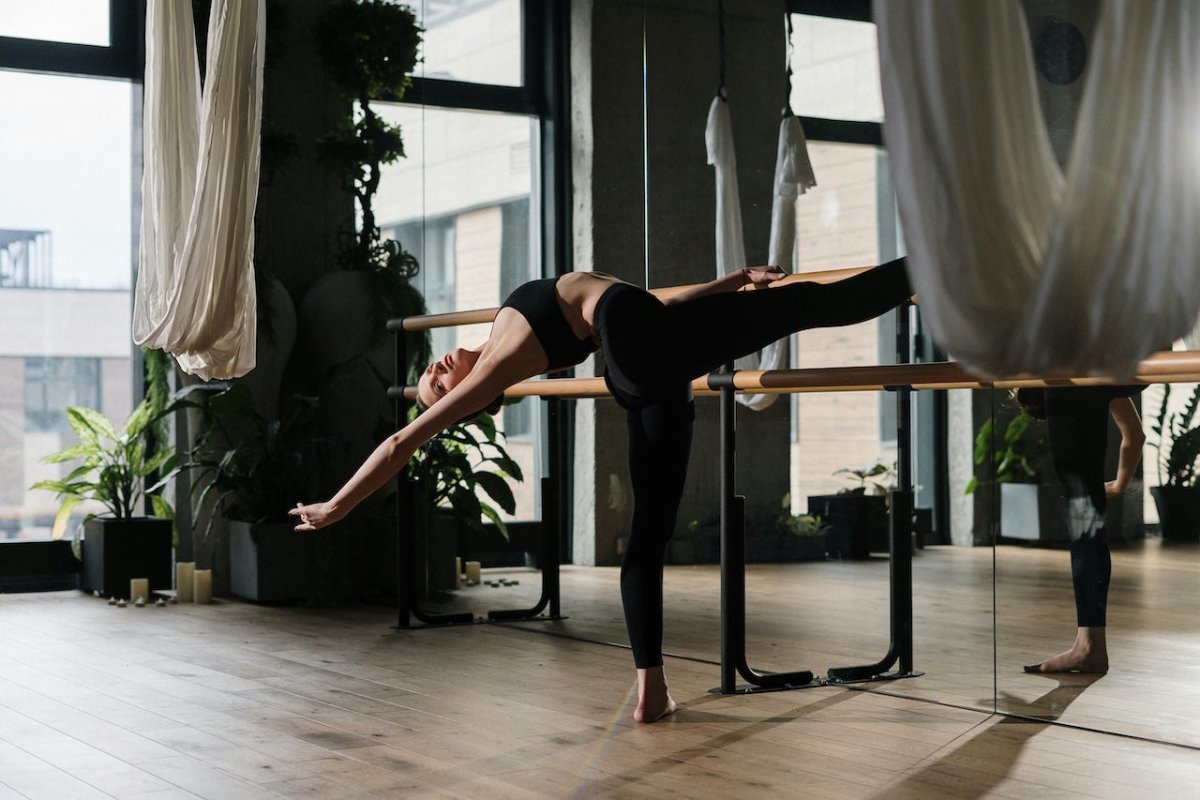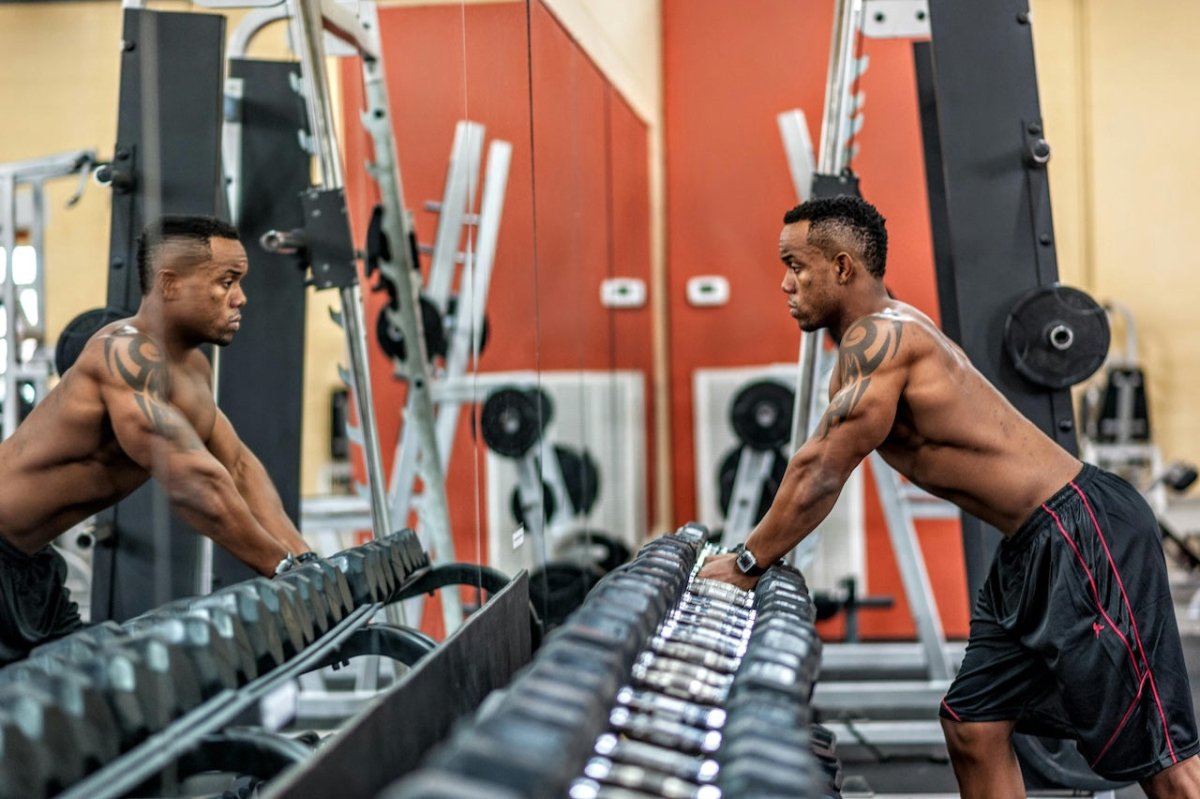
Exercise room mirrors do three jobs: they let you check your form, they make the room feel bigger and brighter, and they make a spare room look like a real gym. The type of mirror you pick decides how well it does all three.
This guide compares the four main types, explains wall-mounted vs. free-standing, and covers size, safety, installation, and cost.
The short answer: For most home gyms, choose 1/4-inch glass with polished edges and a safety backing film, mounted to the wall. A 4' × 6' panel hung vertically shows your full body, and it's $419.99 delivered and installed.
Why Your Exercise Room Needs a Mirror

A mirror is your coach when no one's watching. It shows your squat depth, knee position, and posture as you move, so you can fix problems before they turn into habits. Here's more on how mirrors help posture and injury prevention.
Mirrors also bounce light around the room, which helps in basements and spare rooms with small windows. And a full mirror wall makes the space read as a gym, not a storage room with a treadmill in it.
4 Types of Exercise Room Mirrors Compared
Here's how the main options stack up, starting with the one we recommend for most rooms.
1. Glass With a Safety Backing
Standard annealed glass (glass that hasn't been heat-treated) gives the clearest, truest reflection, especially at 1/4 inch thick. A safety backing film on the back holds the glass together if it's hit, so it webs instead of breaking into loose shards. Openings for outlets can be cut into it. This is the type we sell and install.
Best for: most home gyms, garage gyms, and studios.
2. Tempered Glass
Tempered glass is heat-treated to make it stronger, and it breaks into small, blunt pieces instead of sharp shards. The trade-offs: it can't be cut or drilled after tempering, so every size and cutout has to be ordered exact, and heat treatment can add slight optical distortion. It also tends to cost more.
Best for: rooms with heavy equipment close to the wall, if you can order exact sizes ahead of time.
3. Acrylic Mirrors
Acrylic is a plastic sheet with a mirror finish. It's light and won't shatter, but it flexes, so the reflection can look wavy, and it scratches much more easily than glass.
Best for: kids' play areas, or spots where weight matters more than a sharp reflection.
4. Mirror Tiles
Mirror tiles are cheap and easy to carry, but every seam breaks up your reflection, which makes form checks harder. They usually go up with adhesive, which is hard to remove later.
Best for: decor and small accent areas, not form checks.

| Mirror type | Reflection | Watch out for |
|---|---|---|
| Glass with safety backing | Clearest and truest | Heavy, so it needs secure mounting |
| Tempered glass | Clear, may show slight waviness | Can't be cut after tempering |
| Acrylic | Can look wavy | Scratches easily |
| Mirror tiles | Broken up by seams | Usually glued on |
Wall-Mounted vs. Free-Standing Mirrors
For a dedicated exercise room, wall-mounted mirrors win. They're bigger, they stay put, and they don't take up floor space.
Free-standing and leaning mirrors are easy to move, but they're smaller, and anything leaning against a wall in a room full of weights can get bumped over. If you use one, anchor it to the wall. Renting? A wall-mounted mirror goes up with screws, so get your landlord's okay first.
How to Choose the Right Exercise Room Mirror
- Size. A 4' × 6' panel hung vertically shows your full body. In a smaller room, a 3' × 5' panel works. Here's why 4' × 6' is the go-to gym mirror size.
- Width. Line panels up side by side for a wider view. A 13-foot wall fits three 4' × 6' mirrors hung vertically.
- Thickness. Go with 1/4-inch (6mm) glass. Thicker glass stays flatter on the wall, so the reflection stays true.
- Edges. Flat-polished edges look clean without a frame and have no sharp corners.
- Safety backing. It's the difference between a mirror that webs when hit and one that drops shards.
- Height. Start the mirror 0 to 16 inches off the floor, or just above the outlets, so you can see your feet.
Should You Install It Yourself?
You can, but plan for the weight. A 4' × 6' glass panel weighs about 75 pounds, and it has to go up level, flush, and fully supported.
Our standard install sets each mirror in a bottom J-channel (a metal track along the bottom edge) and secures the top with clips, with no glue. A single wall up to 16 feet usually takes our crew 2 to 3 hours.
Big-box stores and online marketplaces sell mirror kits you put up yourself. Before you buy, compare thickness, edges, and backing. Here's how hardware store mirrors compare with commercial-grade gym mirrors, and the full trade-off between DIY and professional gym mirror installation.
What Exercise Room Mirrors Cost
A 4' × 6' mirror is $344.99 and a 3' × 5' is $274.99. Professional installation is $75 per mirror, so one 4' × 6' is $419.99 installed, two are $839.98, and three are $1,259.97. Those prices assume drywall; concrete, block, and brick walls add $50 per mirror.
We deliver and install within 100 miles of our 8 metro hubs, usually within 3 to 10 days. Our work is trusted by brands including Four Seasons, Anytime Fitness, Snap Fitness, Club Pilates, YWCA, and Delta.
Exercise Room Mirror FAQs
What's the best type of mirror for an exercise room?
For most rooms, wall-mounted 1/4-inch glass with polished edges and a safety backing film. It gives the clearest reflection, and the film holds the glass together if it's hit.
How thick should an exercise room mirror be?
Go with 1/4 inch (6mm). It stays flat on the wall and gives a clear, true reflection.
Are acrylic mirrors good for a home gym?
They're light and won't shatter, but they flex and scratch, so the reflection is less clear. They work for kids' areas. For checking your form, glass is better.
Can I install a gym mirror myself?
Yes, if you can safely lift a 75-pound panel and mount it on a bottom track with top clips. We offer a delivery-only option on the product page, but we recommend professional installation for panels this heavy.
Do I need a full wall of mirrors?
No. One 4' × 6' panel works for most solo workouts. Add panels side by side if you want to see yourself from more angles or train with a partner.
Get the Right Mirror for Your Exercise Room
Build your mirror wall online and pick your install date at checkout. Our team delivers and installs it, usually within 3 to 10 days, and customers rate us 4.99 out of 5 across 650+ reviews.
Build Your Mirror WallQuestions? Call (651) 615-4234 or email info@mirrorsdelivered.com, 9:00 AM to 5:00 PM CST.