Gym mirrors for cardio and dance let you see the things you can't feel while you're moving: your lines, your spacing, whether you're on the count, and where your form slips when you get tired. That's why every dance studio has a mirror wall, and why one is worth adding to a home workout room if you dance, take cardio classes, or follow along with videos.
Here's what a mirror can show you, how to use it without leaning on it, and how to set up a wall that works for movement that travels.
The short version
Run the mirror across the full width you move in, start it low (0 to 16 inches off the floor), and fix it to the wall. Use it to learn and check a routine, then practice facing away so you can perform without it.

What a Mirror Shows You in Dance
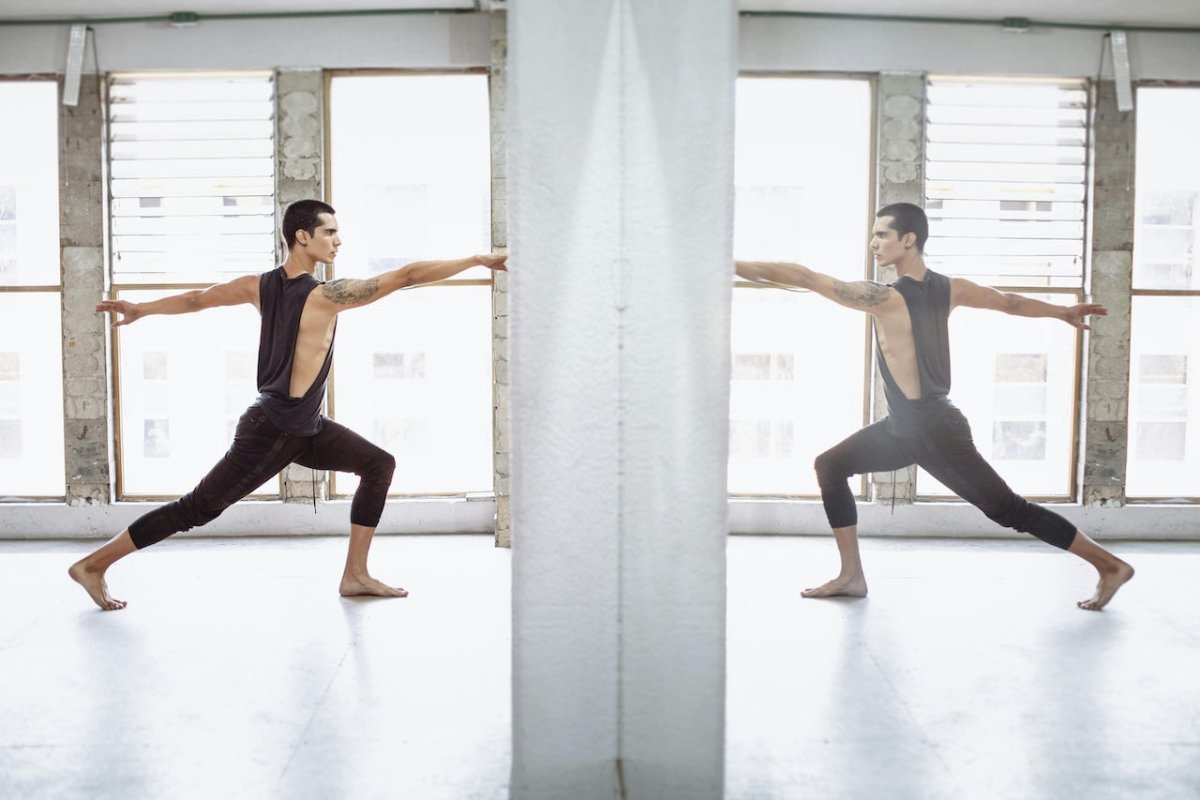
Dance is built on shapes and lines, and a mirror is the fastest way to check them. A few classic checkpoints:
- Pliés: knees tracking over toes, hips level, no tucking under.
- Arabesques: one long line from fingertips through the lifted leg.
- Pirouette prep: square hips and shoulders before you turn.
- Isolations and choreography: sharp, clean shapes that match the count.
In a group, the mirror also shows spacing. You can see whether you're drifting into someone's lane or falling out of a formation without turning around.

What a Mirror Shows You in Cardio
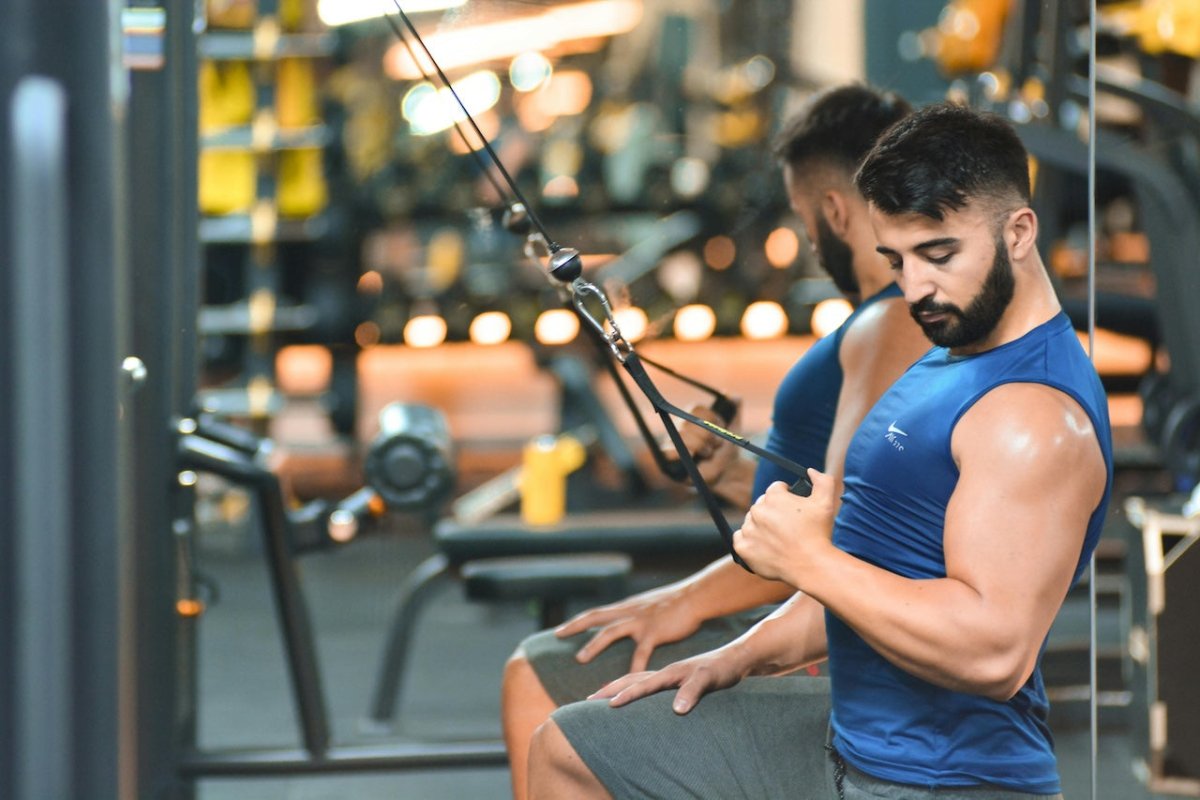
High-intensity cardio is where form breaks down quietly, usually in the last few reps when you're tired. A mirror helps you catch it:
- Jump squats: knees landing in line with your toes, not caving in.
- Burpees: a straight plank line through the push-up, hips not sagging.
- Mountain climbers: hips level instead of bouncing up and down.
- Dance cardio: staying on the beat with the instructor or video.
If you follow classes online, put the screen next to the mirror rather than across the room. That way you can glance between the instructor and your reflection without twisting your neck mid-move.

Use the Mirror to Learn, Then Practice Without It
Here's the honest part: a mirror is a great teacher and a bad crutch. A resource paper from the International Association for Dance Medicine & Science warns that leaning on the mirror can hold back a dancer's own sense of movement, and that dancers taught without mirrors often felt better about their bodies.
That doesn't mean skipping the mirror. It means using it on purpose:
- Learn a new combination facing the mirror so you can check shapes and timing.
- Once you know it, run it facing away from the mirror, or with your eyes on a fixed point.
- Check back in the mirror only on the parts that still feel off.
- Before a performance, rehearse without the mirror. There won't be one on stage.
For cardio, the same idea applies: a quick check at the start of a set and when you're tired, not a stare-down for every rep.

Setting Up a Mirror Wall for Dance and Cardio
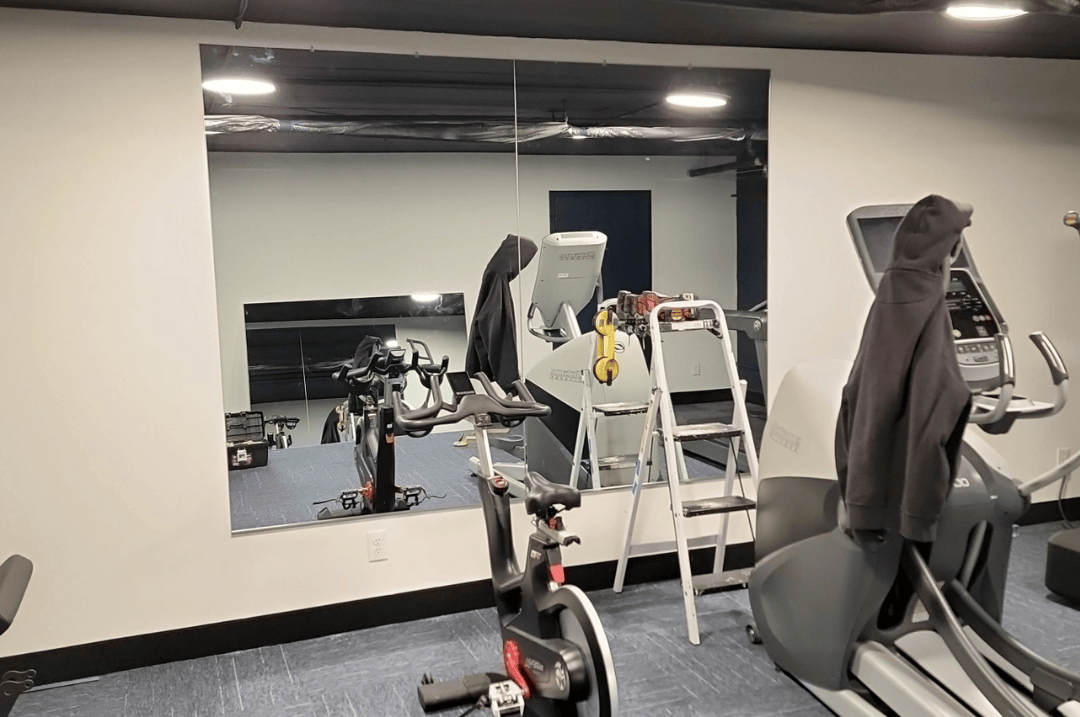
- Go wide. Dance travels, so the mirror should cover the width you move across, not just the spot where you stand. Three 4 x 6 ft panels side by side cover 12 feet. Here's why the 4 x 6 ft panel suits most workout rooms.
- Start it low. Mount the bottom edge 0 to 16 inches off the floor so floor work stays in view. A 6-foot panel that starts 12 inches up tops out at 7 feet, which keeps most jumps in frame. Here's more on sizing and placing a full-length mirror.
- Clear the floor. Leave open floor in front of the mirror to travel a few steps in every direction, and keep weights and equipment away from the glass.
- Fix it to the wall. Jumping and quick footwork near a leaned or door-hung mirror is asking for trouble. A wall-mounted mirror in a J-channel stays put.
- Choose glass that stays true. 1/4-inch glass doesn't wave, and a safety backing film holds the glass together if it's ever hit.

Every Mirrors Delivered mirror is 1/4-inch glass with flat-polished edges and a safety backing film, mounted in a J-channel with no glue. See mirror sizes and book delivery with installation.
Studios: Why Instructors Want the Whole Wall
In a class, the mirror does double duty. Instructors can face the same way as the class and still watch everyone in the reflection, which makes it easier to demonstrate and correct at the same time. Students can see the instructor and themselves without turning around.
That's why studios usually mirror the full front wall, edge to edge, starting low. Our guide to choosing studio mirrors covers layouts for yoga and movement studios, and the same rules apply to dance.
Smart Mirrors vs. a Mirror Wall
Smart mirrors are screens with a reflective finish, built for guided classes. They're handy for following a workout in place, but most are about one person wide, which doesn't leave room for choreography that travels. A wall mirror plus a TV or tablet set beside it covers both: guided classes and room to move.

For the full picture on size, glass, and installation, see our complete guide to home gym mirrors.
Gym Mirrors for Cardio and Dance FAQ
What type of mirror is best for a home dance studio?
A wall-mounted, frameless 1/4-inch glass mirror with a safety backing film, wide enough to cover the space you dance in. Glass gives a truer reflection than acrylic, which can bow and distort on a wall.
How high should a dance mirror be mounted?
Start it low, 0 to 16 inches off the floor. That keeps floor work in view, and 6-foot panels mounted that low still cover standing work and most jumps.
How much space do I need in front of the mirror?
Enough open floor to travel a few steps in every direction without hitting furniture or equipment. Keep anything heavy well away from the glass.
Will a door mirror or freestanding mirror work for dance?
For a quick outfit-style check, yes. For dance, they're too narrow to show you moving, and they can wobble or tip when the floor shakes. A wall-mounted mirror is the safer choice.
Build a Mirror Wall You Can Dance In Front Of
We deliver and professionally install frameless 1/4-inch mirrors for home dance rooms, workout spaces, and studios within 100 miles of our 8 metro hubs, usually within 3 to 10 days. Customers rate us 4.99 from 650+ reviews.
Planning a studio or a full wall? Call (651) 615-4234 (9:00 AM to 5:00 PM CST) or email info@mirrorsdelivered.com.